
·
4 minutes
The Presales Trap: When ‘Everything is Doable’ Hides What It Really Takes

Hassan Omar Oweidat I Head of Enterprise Solutions
In the world of business applications—ERP, CRM, or industry-specific platforms—presales is the phase where dreams are sold. It’s the part of the process where client pain points meet solution promises, and where trust begins to build… or erode.
Unfortunately, in many presales engagements, a dangerous phrase is often repeated: “Everything is doable.”
On the surface, it sounds great: flexibility, capability, commitment. But if you hear it too often and without context, it could signal a lack of clarity rather than true flexibility.
When ‘Yes’ Means Trouble
Sales and presales consultants are under pressure to close deals. The competition is fierce, and buyers often come in with long wish lists and high expectations. In such a climate, it’s tempting for vendors to nod along and promise that everything can be done—integrations, automations, reports, customizations, localizations, migrations—you name it.
But here’s the truth: “Everything is doable” doesn’t mean everything is feasible, cost-effective, or sustainable.
Sometimes, it simply means “we haven’t asked enough questions yet.” Or worse, “we’ll figure it out later”, after the contract is signed, after the budget is set, and after expectations are locked in.
That’s not just bad practice. That’s an illusion of clarity, not capability.
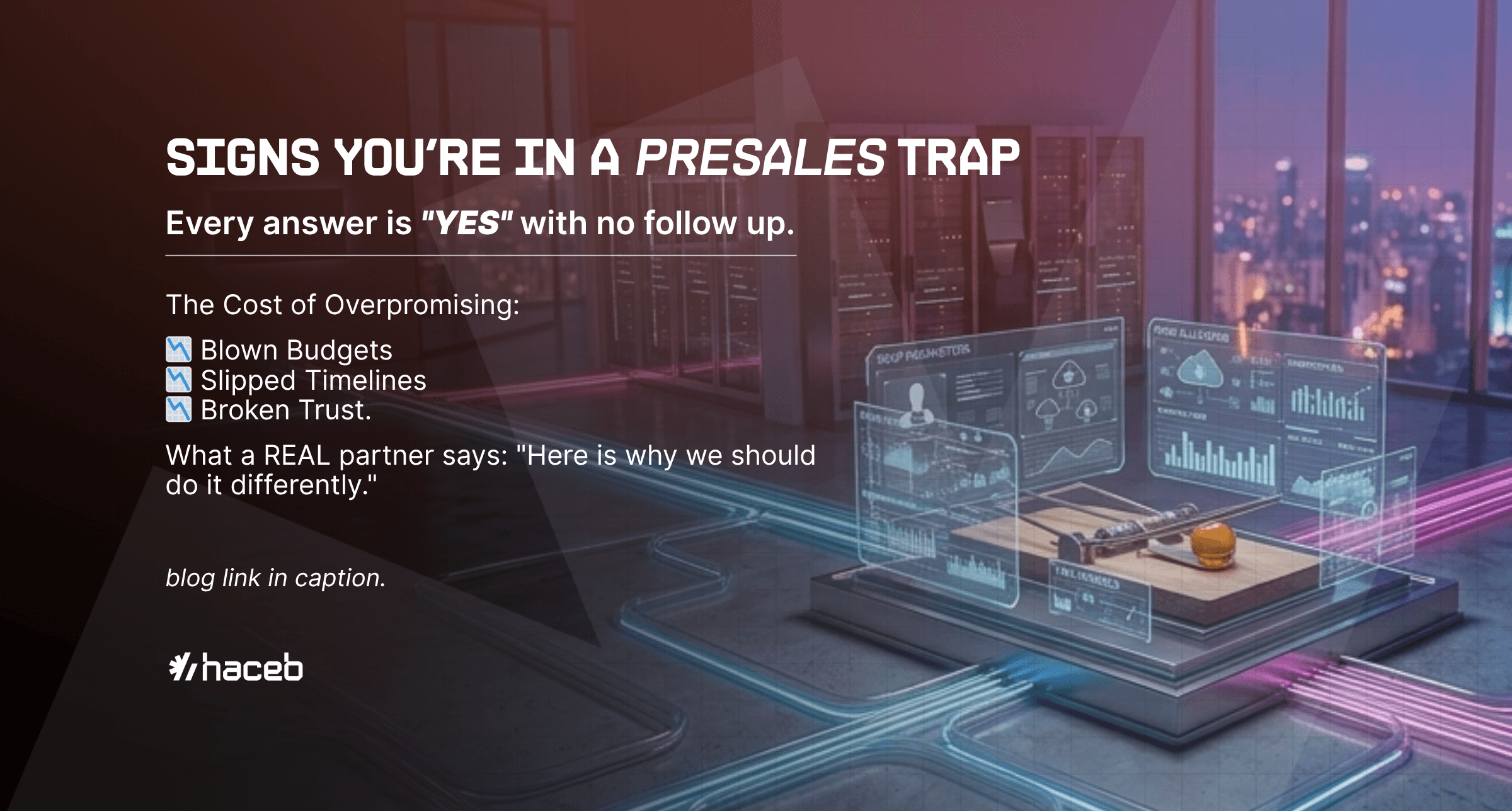
The Hidden Costs of Overpromising
When vendors oversell during presales, the pain begins during implementation:
Scope Creep: Features that were casually promised now require unexpected custom development.
Delays: Discovery takes longer, requirements shift, and delivery timelines stretch.
Ballooning Budgets: What was thought to be "standard" suddenly becomes “additional.”
Blame Game: Vendors blame customers for unclear requirements, and customers blame vendors for misleading claims.
Often, the root cause isn’t dishonesty—it’s poor alignment, rushed discovery, or wishful thinking during presales.
Spotting the Presales Trap
Here are a few signs you're walking into a presales trap:
Every answer is ‘yes’; without hesitation or discussion. Real experts ask follow-up questions to understand the context before committing.
Too much reliance on customization. If the platform needs to be heavily customized to meet your core needs, it may not be the right fit.
Lack of clarity around limitations. Every system has them. If the vendor doesn’t mention any, they’re not being honest.
No technical team involved in presales. A good process includes consultants or solution architects—not just salespeople.
No proof of similar successful projects. Ask for references or case studies. “We’ve done this before” should be backed by facts.
And most importantly: when value is promised but not demonstrated, ask why.
What Responsible Presales Looks Like
Not all vendors fall into the trap of overpromising. The right ones will:
Push back when needed. They’ll tell you when something is out of scope or requires significant effort.
Offer alternatives. If something isn’t doable out-of-the-box, they’ll suggest a workaround or phased approach.
Document everything. Promises made during presales should be clearly reflected in the proposal.
Involve the implementation team. This ensures that what’s promised is grounded in reality.
They’ll guide, not just agree. Clarify, not just close. And they’ll work with you—not just sell to you.
Protecting Your Organization
As a buyer, here’s how to stay safe:
Ask “How?” Don’t just accept yes—ask how it will be done, what dependencies exist, and what impact it will have on the project.
Insist on demos and prototypes. If it can’t be demonstrated now, it may not be ready.
Document all promises. If something is agreed upon, make sure it’s in writing.
Start with a discovery or pilot phase. This allows both parties to validate scope before diving into a full rollout.
And most of all—treat presales as a partnership test, not a performance.
Conclusion: Honesty is the Best Presales Policy
The goal of presales isn’t to say yes to everything; it’s to uncover the truth of what’s possible, within what timeframe, and at what cost.
When done right, presales is where trust is built and long-term partnerships are born.
When done wrong, it’s the start of a slow-motion disaster.
So the next time someone says, “Everything is doable,” take a pause. Ask how. Ask when. Ask why.
Because in enterprise software, it’s not just about what can be promised—it’s about what can be delivered.
FAQ
Got questions? We've got answers.
Everything you need to know about our platform in one place—features, pricing, integrations, and more, all answered for you.